
Let’s talk about how to use compost in your garden, primarily in a general overall application. We will follow up with some more specific uses afterward.
Using compost in garden soil is a great way to improve its fertility, structure, and overall health. Compost is rich in organic matter that adds beneficial material to the soil, enhances moisture retention, and supports beneficial microbial activity. Here’s a guide on how to use compost in your garden soil:
- Determine the amount needed: Consider the condition of your soil and the specific needs of your plants. As a general guideline, aim to add 2 to 3 inches (5 to 7.5 cm) of compost to the top layer of soil.
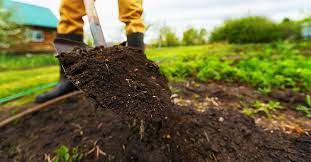
- Prepare the garden bed: Remove weeds, rocks, or debris from the garden bed. Loosen the soil with a garden fork or tiller to a depth of about 8 to 12 inches (20 to 30 cm).
- Apply the compost: Spread the compost evenly over the garden bed. Use a garden rake or shovel to distribute it across the soil surface.
- Mix the compost into the soil: Using a garden fork, tiller, or shovel, incorporate the compost into the top 6 to 8 inches (15 to 20 cm) of soil. This will ensure that the compost is thoroughly blended with the existing soil.
- Level the bed: Smooth the soil surface with a rake, removing any clumps or large chunks of compost that have not fully decomposed.
- Water the bed: After incorporating the compost, water the garden bed thoroughly. This will help settle the soil and allow the compost to start releasing its nutrients.
- Planting and maintenance: Once the compost has been mixed in, you can proceed with planting your desired plants or seeds. Water the garden regularly, as compost-amended soil tends to retain moisture better than unamended soil.
Additional tips:
– Compost can also be used as a top dressing around existing plants. Apply a thin layer of compost (about ½ to 1 inch) around the base of plants, avoiding direct contact with stems or trunks.
– You can make spot applications as well. If you are planting seedlings, you can dig down well past the existing root depth and mix in more compost where the mature plants’ roots will grow into.
-Those two previous applications can be used on either existing potted plants, or new pot plantings.
– If you have heavy clay soil, adding compost can help improve drainage and aeration. Repeat the compost application annually or as needed to maintain soil health.
Using compost in your garden soil is an ongoing process that helps build and maintain healthy soil over time. Regularly adding compost and practicing good gardening techniques will contribute to the overall productivity and vitality of your garden.
 gardenersbud.blog