

Some say, “Plant a Tree in months with a T.” Of course, this is just a saying, but it has some basis that applies. August, September, and October are generally seen as the best months to plant a lot of tree species. While there are exceptions to the statement, let’s examine planting a tree, since it is now the middle of September.
If you want to plant a tree, now is a pretty good time to do it.
- First, choose the right tree.
Before you start digging, it’s crucial to select the right tree for your location. Consider the following factors:
– Climate: Choose a tree species that is suitable for your local climate. Native trees are often the best choice as they are well-adapted to the conditions in your area.
– Space: Ensure you have enough space for the tree’s mature size. Think about how tall and wide the tree will grow and avoid planting it too close to buildings or other trees.
– Purpose: Decide why you want to plant a tree. Is it for shade, aesthetic beauty, or to provide fruit? Your choice will influence the type of tree you should plant.
– Potted/root ball or loose root trees. This decision is generally based on economics or volume. If you are looking to plant only a few trees, you can select individual tree at a nursery or other retail location. If you are wanting to plant dozens of more trees, generally the loose root trees are much more economical.
- Second gather the necessary tools and materials.
To plant a tree, you’ll need the following tools and materials:
– A healthy tree sapling from a reputable nursery
– A shovel
– A pair of pruning shears
– Organic compost or mulch
– Watering can or hose
– A stake and tree tie (if necessary)
- Prepare the planting site.
Here’s how to prepare the planting site:
– Choose a location with well-draining soil and good sunlight exposure for your tree.
– Clear the area of any weeds, grass, or debris. You want the tree to have a clean start.
– Dig a hole that is two to three times wider than the root ball of the sapling and only as deep as the root ball or slightly deeper then longest root for loose root plantings.
- Plant the Tree.
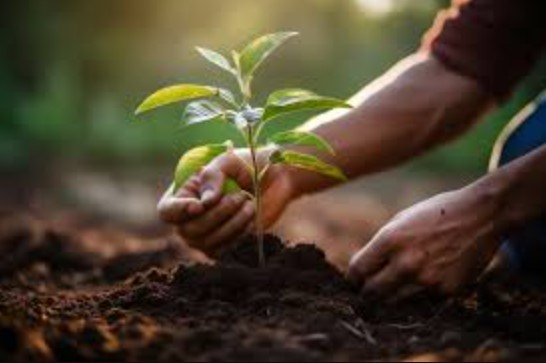
Now, it’s time to plant the tree:
– Gently remove the sapling from its container or burlap sack. Be careful not to damage the roots.
– Place the sapling in the center of the hole, making sure the top of the root ball is level with the ground surface.
– Fill the hole with soil. The soil can be mixed with around 25% compost or maybe more if the original soil is extremely sandy or mostly clay. Pat it down as you go to remove air pockets. Water the tree to settle the soil.
- Mulch and water.
Mulching is essential to retain moisture and keep weeds at bay:
– Spread a layer of organic mulch or compost around the base of the tree, leaving a small gap around the trunk to prevent rot.
– Water the tree thoroughly immediately after planting and regularly thereafter. Young trees need consistent moisture to establish their roots.
- Support the Tree (If Necessary)
If your tree is tall or in a windy area, use a stake and tree tie to support it until it’s firmly rooted. Be sure not to tie it too tightly to avoid damaging the bark.
- Maintenance
Keep a watchful eye on your newly planted tree. Water it regularly, especially during dry spells, and prune it as necessary to remove dead or damaged branches. As it grows, your tree will reward you with shade, beauty, and a host of environmental benefits.
Planting a tree is a rewarding task, but don’t be too disappointed if there is not 100% success. Trees are not generally expecting to be moved. By nature, they kinda want to grow right where they start. It may take a few attempts to get your healthy tree where you want it. By choosing the right tree, preparing the planting site, and providing proper care, you can help ensure that your tree thrives. So, grab a shovel and get started on your journey to making a green difference today!
 gardenersbud.blog